

How French Buyers Can Identify High Quality Decal Moroccan Tea Glass?
Pulished on Jan. 31, 2026


The Moroccan tea glass, often decorated with exquisite gold or colored decals, dominates an important place in the French market. Driven by the cultural appreciation of North African aesthetics and the popularity of mint tea, now these glasses are a beautiful scenery in home decor and specialized retail. However, for French buyers—especially those supplying high-end tableware stores or e-commerce platforms—a critical pain point persists: decal durability.
The reason why consumer often complaints and returns is that decals peeling, fading, or cracking after just a few cycles in a domestic dishwasher. These problems directly impact brand reputation and profitability. To overcome this challenge, buyers must move beyond visual appeal and focus on the technical specifications of the decal making process.
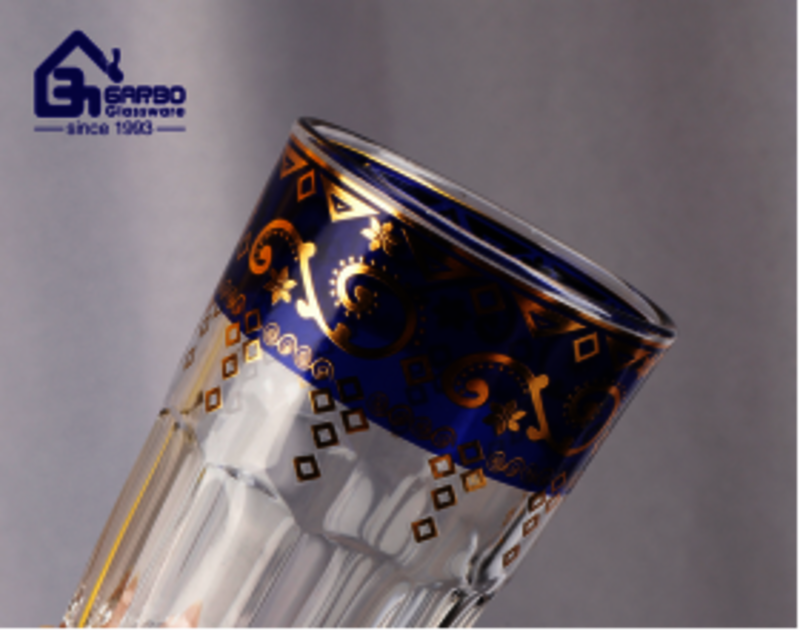
1. The Decal Durability Element: Low-Fire VS. High-Fire
The durability of a glass decal is basically determined by the firing temperature which is used during the application process. Buyers must understand the difference between the two methods:
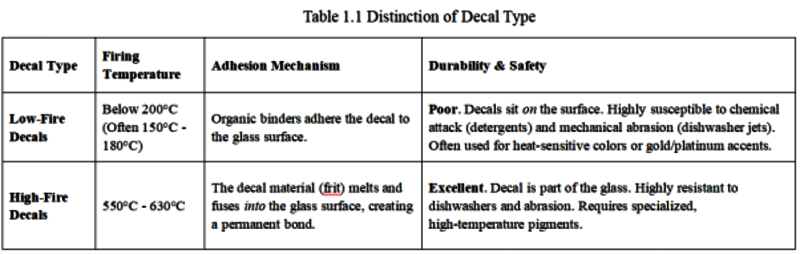
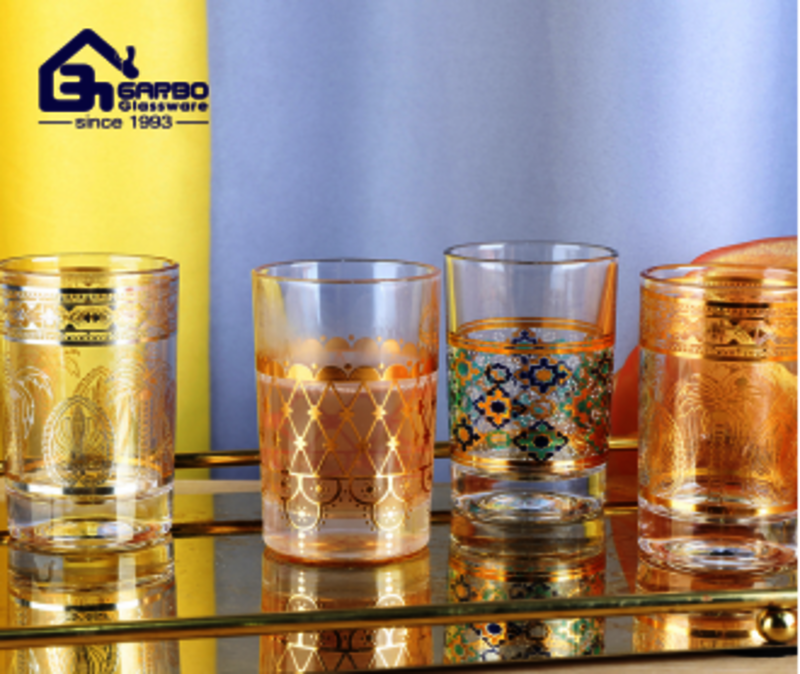
While many traditional Moroccan style glasses are applied with low-fire decals to achieve vibrant colors or delicate metallic effects, this choice compromises durability. French purchasers, whose market demands high quality products that should be suitable for modern convenience, must insist on high-fire processes or advanced low-fire alternatives that meet strict European standards. Therefore, to check about the high quality decal glass of a factory, the purchasers can request about what kinds of decal supplier can offer.
2. The Standard: Testing for Dishwasher Resistance
To ensure a product is genuinely "Dishwasher Safe," procurers can demand proof of compliance with the European standard EN 12875 from glassware wholesalers. This is the definitive test for mechanical dishwasher resistance of ceramic, glass, and glass-ceramic home tableware or collection etc.
2.1The EN 12875 Test Protocol
The EN 12875 standard stipulates the method for determining the resistance of items to the chemical, thermal, and mechanical stresses of machine washing.
• The Cycle: The test includes to place the glass items into a standard domestic dishwasher and running multiple cycles using a specified reference detergent to test durability.
• The Requirement: For commercial viability in the French market, consumers can require a minimum of 50 cycles or, ideally, 100 cycles of testing. A successful result means the decal shows no significant loss of color, gloss, or adhesion after the specified number of washes.
• The Data: A supplier claiming "Dishwasher Safe" must be able to provide a third-party laboratory report (e.g., from SGS, Bureau Veritas) clearly stating the number of cycles passed under EN 12875.
2.2 Adhesion Verification: The Cross-Cut Test (ISO 2409)
Before committing to mass production, buyers can also verify the fundamental adhesion of the decal to the glass substrate using the Cross-Cut Test, standardized under ISO 2409.
This test involves:
1. Using a specialized cutting tool to make a lattice pattern (e.g., 10x10 squares) through the decal and down to the glass.
2. Applying a standardized adhesive tape (such as 3M 600 or 610) firmly over the lattice.
3. Rapidly peeling the tape off at a specific angle (typically 60 degrees).
The result is graded on a scale from 0 to 5, where:
• Grade 0: The edges of the cuts are completely smooth; none of the squares are detached. (The required standard for high-quality, durable decals).
• Grade 5: More than 65% of the area is detached.
Purchasers can insist on a supplier-provided or third-party ISO 2409 Grade 0 report for the decal application. This simple metric is a powerful indicator of the process quality.
3. Garbo Glassware Supplier: Assistance for Moroccan Decal Glass Cups Buyers
Durability Standard
Moroccan tea glasses made from Garbo feature decals that have passed the rigorous EN 12875:2005 standard, ensuring they can withstand at least 100 dishwasher cycles, providing you with durable and reliable products This standard sets a clear and measurable mark for dishwasher resistance for France buyers in Europe, assuring consumers of the product's durability.
Adhesion Proof
We provide Cross-Cut Test (ISO 2409) reports confirming a Grade 0 rating which can verify the strong bond between the decals and the glass. This test verifies the fundamental bond strength between the decal and the glass, ensuring that the decals do not peel off easily.
Decal Material
Our decals are made using High-Fire or equivalent Dishwasher-Safe technology for France buyers, avoiding the use of cheap, low-durability organic decals, ensuring high quality and durability. This ensures that the decals are of high quality and durability as well as prevents the use of low-quality organic decals.
Sample Testing
We reserve the right to conduct random in-house wash tests on pre-shipment samples (AQL inspection), allowing for final verification before accepting the batch, ensuring the highest quality products.This allows for final verification of product quality before acceptance, ensuring that all products meet the required standards.
Conclusion
The charm of the Moroccan tea glass in the French market is undeniable, but its commercial success aims at durability. By focusing on the technical evidence—specifically the EN 12875 report and the ISO 2409 adhesion rating—French buyers can confidently select suppliers whose craftsmanship meets the high standards of modern European consumers. Durability is not a luxury, instead it is a fundamental requirement for maintaining brand influence and securing long-term market presence.
So if you are finding a supplier who can secure your Moroccan tea glass cups business, come and choose Garbo now!
Tel: +86 20 8479 1380
+86 20 8479 1998
+86 20 8479 0028
E-mail: [email protected]
Address: 7th-8th Floor, Promise Commercial Mansion, No.282, Yingbin Road, Panyu District, Guangzhou, Guangdong.


-
-
-

Step into Garbo’s 7th floor and experience the strength of a 30-year-old glass brand
-

Lion Dance Bestowing Blessings: Greetings from Garbo Flatware Factory
-

-

The Mayor of Guangzhou Visits Our Booth at the 136th Canton Fair